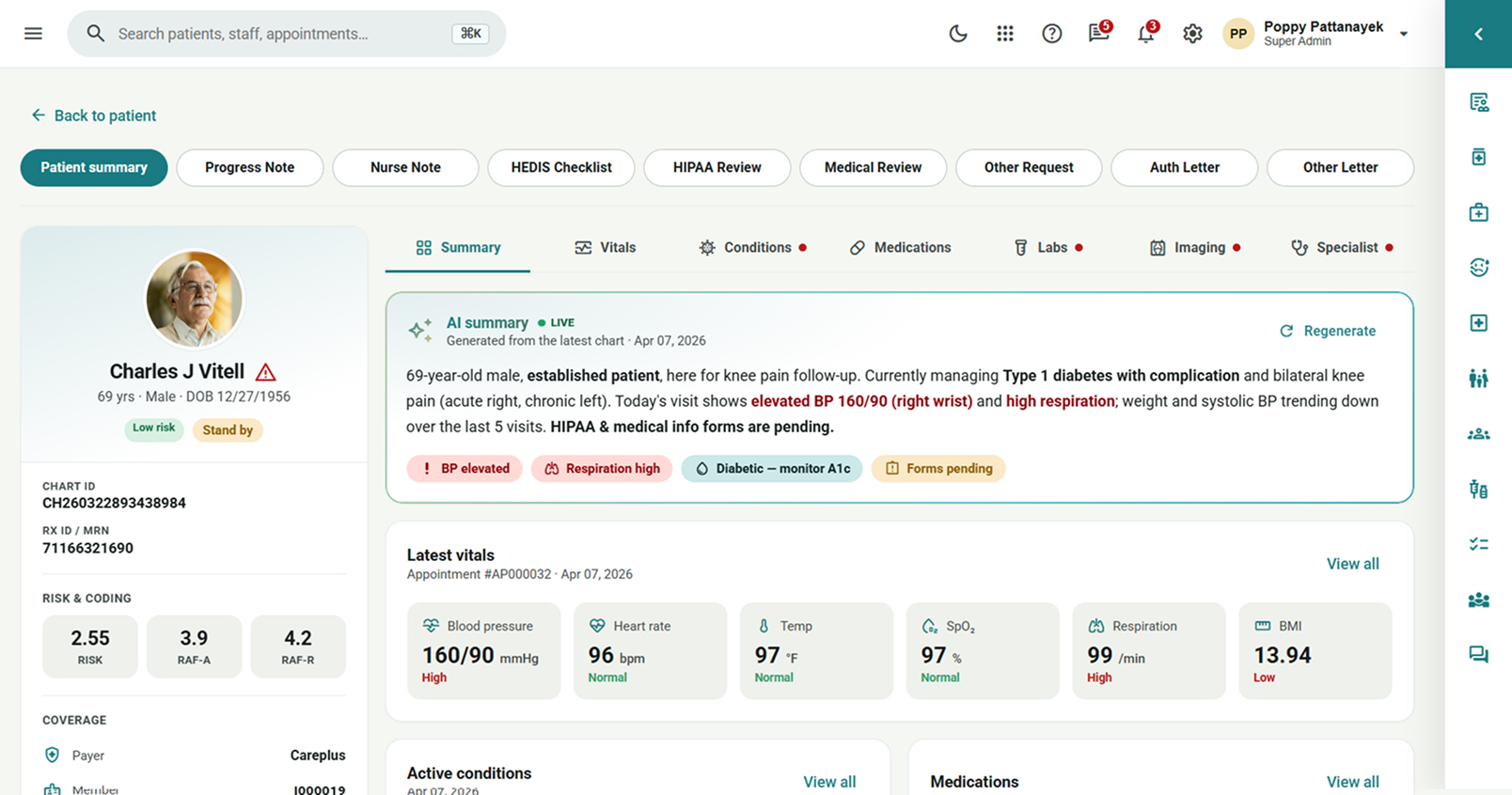
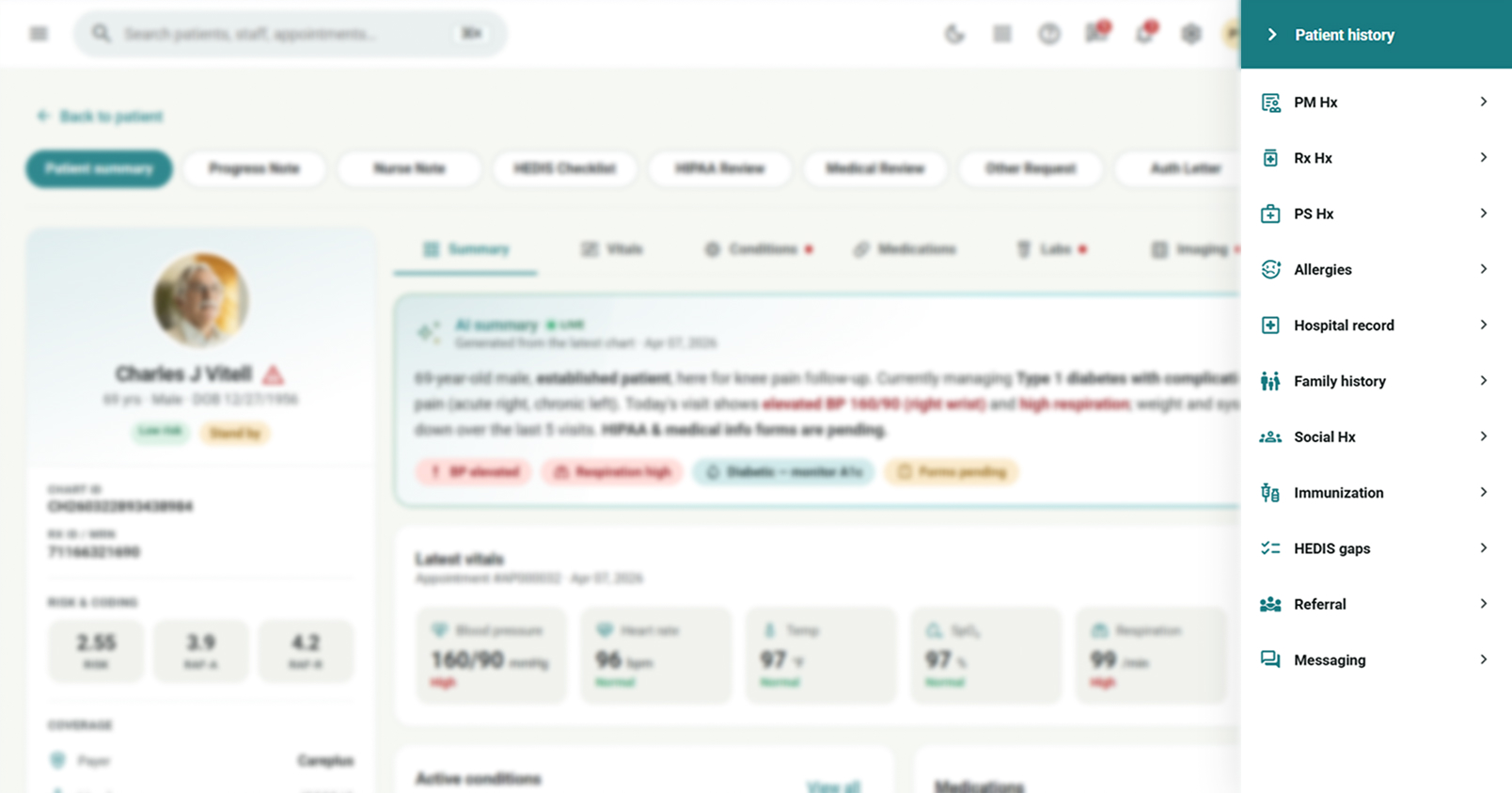
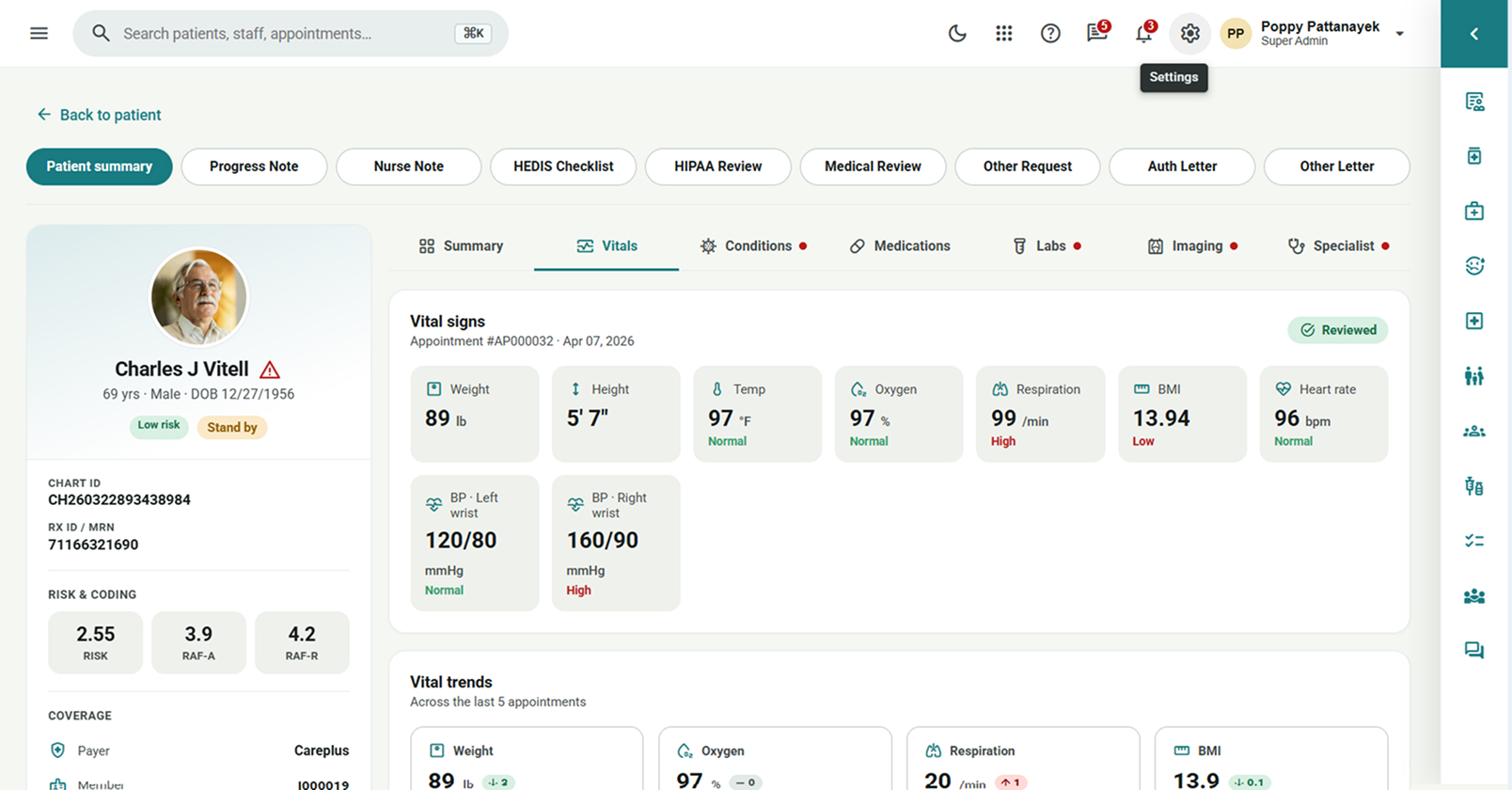
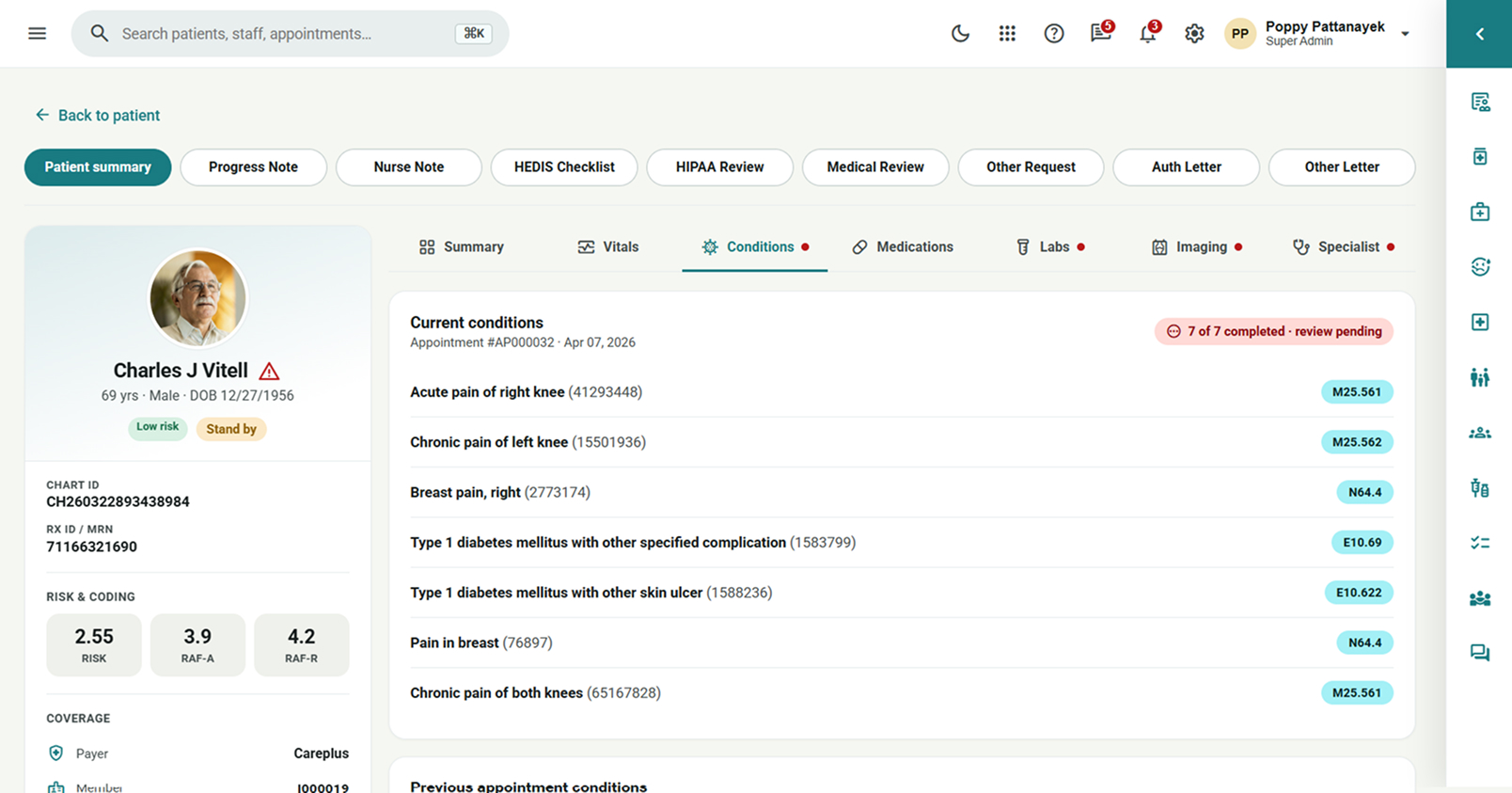
Zura360 walks a full review of systems and physical exam through the same drill-down engine — every finding, positive or negative, composes straight into one clean note. Nothing re-typed, nothing re-entered.
Symptoms and signs are structurally different — Zura360 still asks and examines them the same clean way.
15 body systems, each opening a multi-level tree of findings — from a single symptom down to its exact qualifiers.
19 exam regions use the identical drill-down tree — so the exam feels exactly as fast as the interview.
Clear a whole system as negative — or a whole region as within normal limits — in one tap when nothing is positive.
Visual body maps track exactly where a finding sits, speeding exam documentation for regions like skin or musculoskeletal.
Every selection writes itself into a running note in plain clinical language — any free text you add is always preserved above it.
No modals, no page reloads — pick a system on the left, drill into its findings in the center, watch the note build on the right.
The same tree structure walks a patient-reported symptom and a clinician-observed sign down to their exact finding — so the note reads consistently no matter which side it came from.
Constitutional :: Positive Weight Gain, Fatigue, Weakness.
General :: well-appearing.
Walk the review of systems — mark negatives in bulk, drill into anything positive.
Run the physical exam through the same drill-down tree, region by region.
Every finding writes itself into one note — ready to sign, nothing re-typed.
Most charts ask a clinician to document a symptom in the interview, then re-describe the matching exam finding in free text — two write-ups for one clinical fact. Zura360 keeps them structurally identical, so the note stays consistent and nothing gets typed twice.
A checkbox form only captures a system as positive or negative. Zura360 drills down multiple levels into the actual finding — location, quality, timing — so the note reads like a clinician wrote it, not like a form was filled in.
No — Mark-all-negative and All-normal clear a whole system or region in one tap, so a routine visit takes seconds while a complex one still gets full detail where it’s needed.
Yes. The auto-composed lines sit at the top of the note and anything you type stays exactly where you left it — recomposing never overwrites your own words.
Zura360 is part of the progress note inside ZuraHMS, where its findings flow straight into the same chart ZuraCurodex and ZuraInsight read from.
Book a demo and watch a full ROS and physical exam compose into one note in real time.